
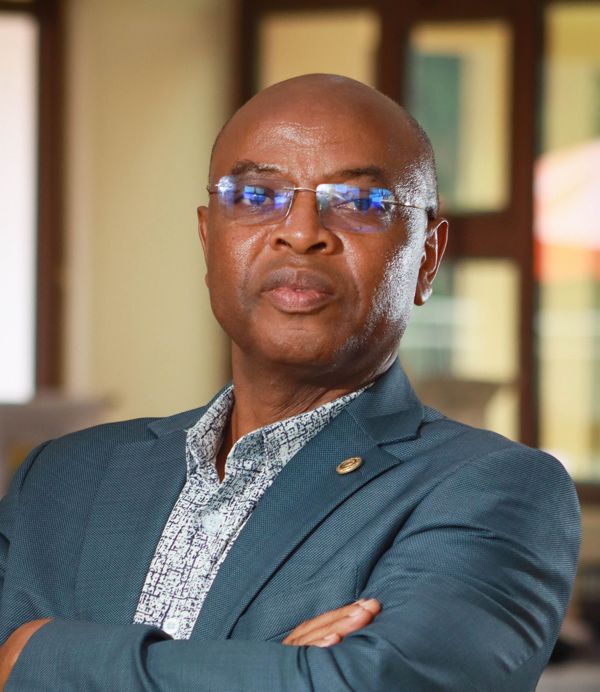
Bank of Uganda Deputy Governor Prof. Augustus Nuwagaba says untitled land, tight liquidity, and delayed court cases are restricting youth access to credit, urging group-based borrowing models as a solution.
The Deputy Governor of the Bank of Uganda, Augustus Nuwagaba has said that structural weaknesses in Uganda’s financial and property systems continue to limit young people’s access to credit, with untitled land and liquidity shortages emerging as major barriers.
Speaking during an engagement on access to finance, Nuwagaba noted that many young people are unable to meet commercial bank lending requirements due to lack of acceptable collateral, particularly titled land.
“Much of the land in Uganda is not formally titled, and many young people do not own property that can be presented to banks,” he said.
He further explained that liquidity constraints in the financial sector are being worsened by significant amounts of money locked up in prolonged commercial litigation, reducing funds available for lending.
“A lot of money is locked in litigation. When cases take long to resolve, it constrains the amount of money available for lending,” he noted.
According to Nuwagaba, this imbalance between demand and supply of credit has pushed up borrowing costs and excluded many young entrepreneurs and small businesses from formal financial systems.
To address the challenge, he called for more inclusive lending approaches, particularly group-based collateral systems where borrowers form trusted groups that jointly guarantee loans.
He said such models rely on social trust and shared responsibility rather than physical assets, making credit more accessible to those without formal property ownership.
The approach, he noted, draws inspiration from global microfinance systems such as the Grameen Bank model pioneered by Muhammad Yunus, which has demonstrated strong repayment performance through peer accountability.
Nuwagaba said similar frameworks are already being applied in Uganda through schemes such as the Agricultural Credit Facility and the Small Business Fund, where group lending is actively encouraged.
He added that the Bank of Uganda continues to work with commercial banks to co-finance loans, helping to lower borrowing costs and expand access to credit for underserved groups.
He encouraged young people to organize themselves into credible groups based on trust, shared interests, or location in order to improve their chances of accessing financing.
“If you cannot meet traditional requirements individually, organizing yourselves into strong and trustworthy groups can help you access credit,” he said.
